Details
1. Multiplanetary is Non-Negotiable
The book's opening chapter starts with a quote Musk repeated at the 2026 Mars Society Convention: "The future of humanity must be multiplanetary." Chen walks through the early Falcon 1 failures, the 2008 SpaceX rescue, and the iterative design process that turned Starship from a PowerPoint into a rocket that pulled off a full-stack landing in the July 2026 test at Boca Chica.
That test wasn't just a technical win. It proved the Muskian idea that you recover from failure by building the next thing faster. The chapter on Starship's development is the longest in the book, and it doubles as a case study in rapid prototyping. Chen also includes a timeline of all 14 Starship flight tests up to mid-2026, showing how each failure shortened the time to the next launch.
For this theme, the Featured Product matchup is the "Occupy Mars" Tee from the Boring Company. It's 100% cotton, printed with the classic red planet graphic and "Occupy Mars" across the chest. At $34, it's a wearable reminder that Mars isn't a fantasy - it's a project. The shirt is available in the standard store catalog and often sells out after big space news, so grab one when you see it.
2. Energy That Doesn't Destroy the Planet
The second theme Muskism tackles is energy. The book revisits Musk's 2006 "Secret Master Plan" and shows how Tesla Energy finally made it real. By June 2026, Powerwalls had been installed in over 300,000 homes worldwide. The book quotes a line from the April 2026 Tesla earnings call: "The grid goes renewable when storage gets cheap." That sentence sums up the entire philosophy: stop asking for permission, build the cheap storage, and watch the grid change.
What makes this section stand out is the engineering detail. Chen explains the chemistry of LFP battery cells and why they're less thermally volatile than other lithium-ion options. She also breaks down the cost curve, showing how Tesla cut home battery prices by 40% since 2024 without sacrificing output. It's the most accessible explanation we've seen of why solar plus storage is the endgame.
Carrying that energy - literally - is the Tesla Cyberwhistle. Machined from a solid block of aerospace-grade stainless steel, the same stuff used for the Cybertruck shell, it's $50 of pure engineering. It's not a practical whistle; it's a statement that you value material science, just like the book does. The whistle also fits neatly into the glovebox of a Cybertruck, and you'll sometimes see them bundled in the store's "Cyber Utility" combo.
3. Build It Yourself
Muskism's third pillar is direct action. If traffic in LA drives you nuts, you don't write a letter to the mayor. You start a tunnel company. The book covers the Boring Company's 2026 Las Vegas Loop extension, which now runs 11 miles under the Strip. The chapter is full of behind-the-scenes details about how they designed the tunnel boring machine from scratch, including the decision to use off-the-shelf lithium-ion batteries instead of custom packs.
The most interesting part, though, is the business model. The Boring Company's continuous loop system uses standard Teslas, not custom pods, which keeps costs low. Right now, a ride costs $1.50, nearly the same as the Las Vegas Monorail. Chen argues this is the first real alternative to municipal transit in decades.
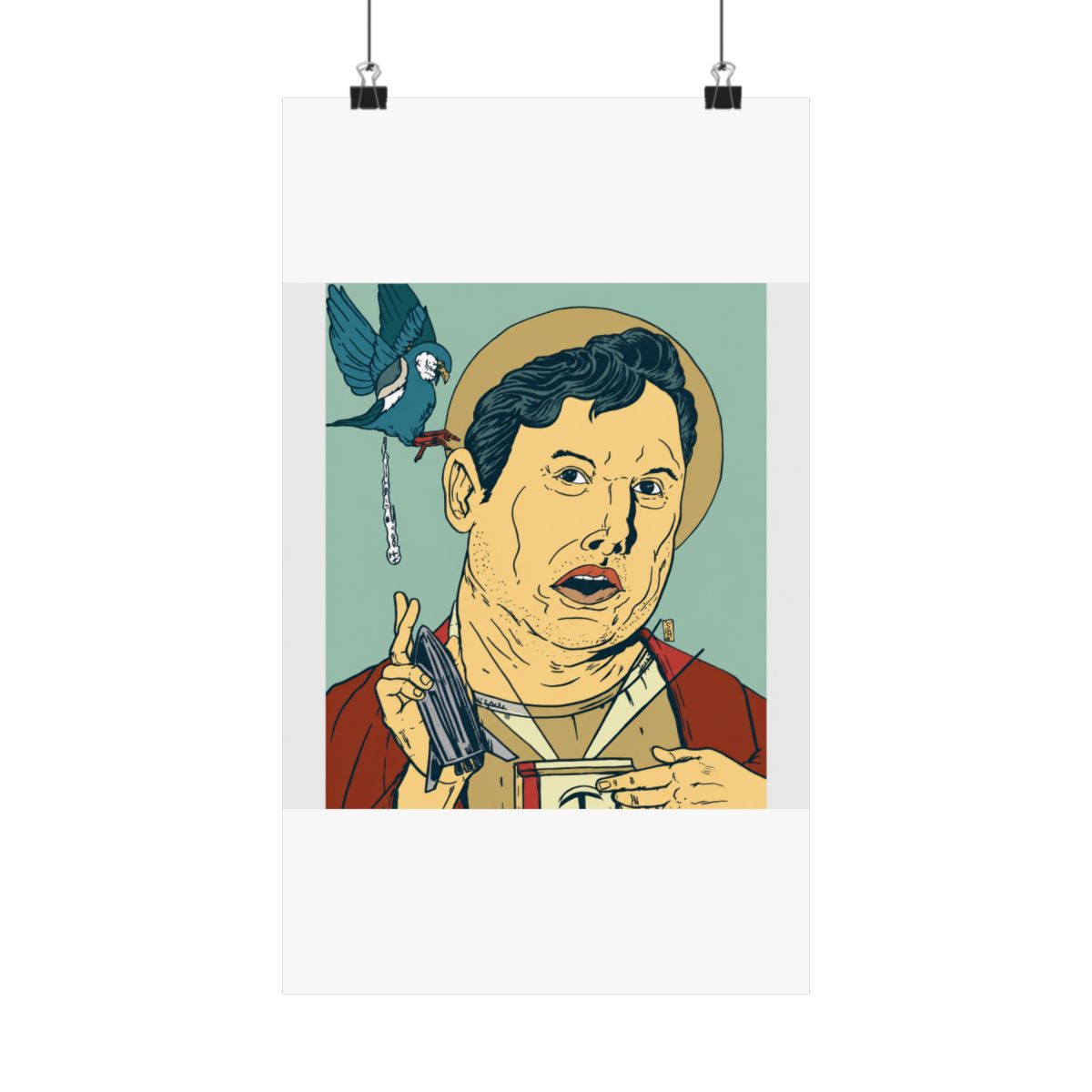
That same "just build it" attitude is captured in the "Nuke Mars" poster. It's a 24" x 36" giclee print on 192gsm museum-quality paper, showing the nuclear-assisted terraforming process. At $38, it's bold, slightly ridiculous, and exactly the kind of thought experiment Muskism enjoys. The poster is a permanent fixture in Elon Musk's merch collection, and its satirical tone makes it a great conversation piece for any home office.